Romans 9:14–21
Good News TranslationOther versions
English
- GNB Good News Translation
- DARBY 1890 Darby Bible
- ASV American Standard Version
- AV 1873 The Cambridge Paragraph Bible of the Authorized English Version
- CSB Christian Standard Bible
- D-R Douay-Rheims Bible
- ESV English Standard Version
- GW GOD’S WORD Translation
- HCSB The Holman Christian Standard Bible
- KJV 1900 King James Version
- LSB Legacy Standard Bible
- LEB The Lexham English Bible
- MSG The Message: The Bible in Contemporary Language
- NET The NET Bible
- NASB95 New American Standard Bible (1995)
- NCV New Century Version
- NIrV New International Reader’s Version (1998)
- NIV New International Version (2011)
- NKJV The New King James Version
- NLT New Living Translation
- NRSVue New Revised Standard Version: Updated Edition
- RSV The Revised Standard Version
- RSVCE The Revised Standard Version, Catholic Edition
- YLT Young’s Literal Translation
Arabic
Czech
French
German
Greek
Hungarian
Italian
Korean
Latin
Portuguese
Russian
Simplified Chinese
Spanish
Traditional Chinese
14Shall we say, then, that God is unjust? Not at all. 15*For he said to Moses, “I will have mercy on anyone I wish; I will take pity on anyone I wish.” 16So then, everything depends, not on what human beings want or do, but only on God’s mercy. 17*For the scripture says to the king of Egypt, “I made you king in order to use you to show my power and to spread my fame over the whole world.” 18So then, God has mercy on anyone he wishes, and he makes stubborn anyone he wishes.
God’s Anger and Mercy
19But one of you will say to me, “If this is so, how can God find fault with anyone? Who can resist God’s will?” 20*But who are you, my friend, to answer God back? A clay pot does not ask the man who made it, “Why did you make me like this?” 21After all, the man who makes the pots has the right to use the clay as he wishes, and to make two pots from the same lump of clay, one for special occasions and the other for ordinary use.
Cross references
Copyright 1966, 1971, 1976, 1992 American Bible Society
In other versions
ESVEnglish Standard Version
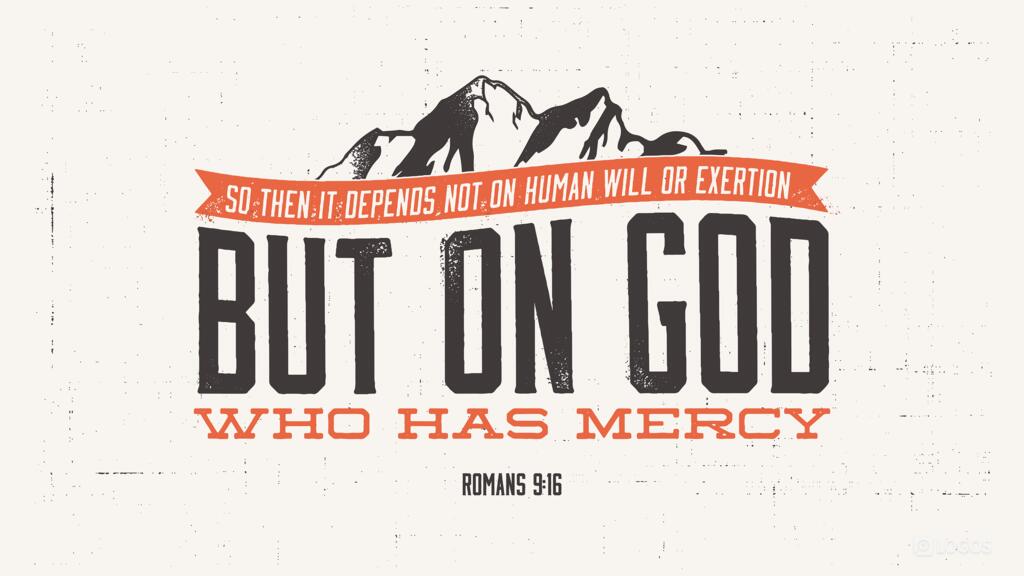
What shall we say then? Is there injustice on God’s part? By no means! For he says to Moses, “I will have mercy on whom I have mercy, and I will have compassion on whom I have compassion.” So then it depends not on human will or exertion, but on God, who has mercy. For the Scripture says to Pharaoh, “For this very purpose I have raised you up, that I might show my power in you, and that my name might be proclaimed in all the earth.” So then he has mercy on whomever he wills, and he hardens whomever he wills.
You will say to me then, “Why does he still find fault? For who can resist his will?” But who are you, O man, to answer back to God? Will what is molded say to its molder, “Why have you made me like this?” Has the potter no right over the clay, to make out of the same lump one vessel for honorable use and another for dishonorable use?
Copyright 2001 Crossway Bibles
NIVNew International Version (2011)
What then shall we say? Is God unjust? Not at all! For he says to Moses,
“I will have mercy on whom I have mercy,
and I will have compassion on whom I have compassion.”
It does not, therefore, depend on human desire or effort, but on God’s mercy. For Scripture says to Pharaoh: “I raised you up for this very purpose, that I might display my power in you and that my name might be proclaimed in all the earth.” Therefore God has mercy on whom he wants to have mercy, and he hardens whom he wants to harden.
One of you will say to me: “Then why does God still blame us? For who is able to resist his will?” But who are you, a human being, to talk back to God? “Shall what is formed say to the one who formed it, ‘Why did you make me like this?’ ” Does not the potter have the right to make out of the same lump of clay some pottery for special purposes and some for common use?
Copyright 1973, 1978, 1984, 2011 Biblica, Inc.
CSBChristian Standard Bible
What should we say then? Is there injustice with God? Absolutely not! For he tells Moses, I will show mercy to whom I will show mercy, and I will have compassion on whom I will have compassion. So then, it does not depend on human will or effort but on God who shows mercy. For the Scripture tells Pharaoh, I raised you up for this reason so that I may display my power in you and that my name may be proclaimed in the whole earth. So then, he has mercy on whom he wants to have mercy and he hardens whom he wants to harden.
You will say to me, therefore, “Why then does he still find fault? For who resists his will?” On the contrary, who are you, a human being, to talk back to God? Will what is formed say to the one who formed it, “Why did you make me like this?” Or has the potter no right over the clay, to make from the same lump one piece of pottery for honor and another for dishonor?
Copyright 2017 Holman Bible Publishers
NLTNew Living Translation
Are we saying, then, that God was unfair? Of course not! For God said to Moses,
“I will show mercy to anyone I choose,
and I will show compassion to anyone I choose.”
So it is God who decides to show mercy. We can neither choose it nor work for it.
For the Scriptures say that God told Pharaoh, “I have appointed you for the very purpose of displaying my power in you and to spread my fame throughout the earth.” So you see, God chooses to show mercy to some, and he chooses to harden the hearts of others so they refuse to listen.
Well then, you might say, “Why does God blame people for not responding? Haven’t they simply done what he makes them do?”
No, don’t say that. Who are you, a mere human being, to argue with God? Should the thing that was created say to the one who created it, “Why have you made me like this?” When a potter makes jars out of clay, doesn’t he have a right to use the same lump of clay to make one jar for decoration and another to throw garbage into?
Holy Bible, New Living Translation, copyright © 1996, 2004, 2015 by Tyndale House Foundation. Used by permission of Tyndale House Publishers. All rights reserved.
LEBThe Lexham English Bible
What then shall we say? There is no injustice with God, is there? May it never be! For to Moses he says, “I will have mercy on whomever I have mercy, and I will have compassion on whomever I have compassion.” Consequently therefore, it does not depend on the one who wills or on the one who runs, but on God who shows mercy. For the scripture says to Pharaoh, “For this very reason I have raised you up, so that I may demonstrate my power in you, and so that my name might be proclaimed in all the earth.” Consequently therefore, he has mercy on whomever he wishes, and he hardens whomever he wishes.
Therefore you will say to me, “Why then does he still find fault? For who has resisted his will? On the contrary, O man, who are you who answers back to God? Will what is molded say to the one who molded it, “Why did you make me like this”? Or does the potter not have authority over the clay, to make from the same lump a vessel that is for honorable use and one that is for ordinary use?
Copyright 2012 Lexham Press
KJV 1900King James Version
What shall we say then? Is there unrighteousness with God? God forbid. For he saith to Moses, I will have mercy on whom I will have mercy, and I will have compassion on whom I will have compassion. So then it is not of him that willeth, nor of him that runneth, but of God that sheweth mercy. For the scripture saith unto Pharaoh, Even for this same purpose have I raised thee up, that I might shew my power in thee, and that my name might be declared throughout all the earth. Therefore hath he mercy on whom he will have mercy, and whom he will he hardeneth. Thou wilt say then unto me, Why doth he yet find fault? For who hath resisted his will? Nay but, O man, who art thou that repliest against God? Shall the thing formed say to him that formed it, Why hast thou made me thus? Hath not the potter power over the clay, of the same lump to make one vessel unto honour, and another unto dishonour?
Public Domain